
GEO (Generative Engine Optimization): How to Get Cited by ChatGPT, Perplexity, Gemini and Copilot
ChatGPT, Perplexity, Gemini and Copilot answer by citing a few sources. GEO is how you become one of them: what studies say, what to do on and off your site, and how to measure.

Eugenio Tommasi
Founder of SEO SRL
Published 25 min read

GEO (Generative Engine Optimization) is the work that makes content visible and cited in the answers of ChatGPT, Perplexity, Gemini, Copilot, Claude and Google's AI features.
Table of contents (11 sections)
- What GEO is and how it differs from SEO and AEO
- How ChatGPT, Perplexity, Gemini, Copilot and Claude choose their sources
- What studies say about the factors that get a page cited
- On-site levers: be readable and write citable passages
- Off-site levers: mentions, reviews, Wikipedia and forums
- AI crawlers and robots.txt: the rule in brief
- llms.txt: when it helps and when it doesn't
- How to measure visibility in AI, step by step
- Six GEO myths
- The first month of work, week by week
- Frequently asked questions
People looking for you no longer open only Google. They ask the same question to ChatGPT, Perplexity or Copilot, and read an answer that is already written, with two or three links to sources.
GEO is the work of being one of those sources. It is not a new discipline you buy separately: it is SEO done well, plus a few levers classic SEO neglects and a different way of measuring.
This guide is for anyone with a website that brings in customers and wants to know what to do, in what order, and how to check whether it works.
What GEO is and how it differs from SEO and AEO
GEO, Generative Engine Optimization, is the work that makes your content visible and cited in the answers of ChatGPT, Perplexity, Gemini, Copilot, Claude and Google's AI features.
The name comes from a paper published on arXiv in November 2023 and presented at KDD 2024. There, visibility is not a ranking position: it is how much of the answer comes from your content. Other names for the same idea: LLM SEO, AI SEO, ChatGPT SEO.
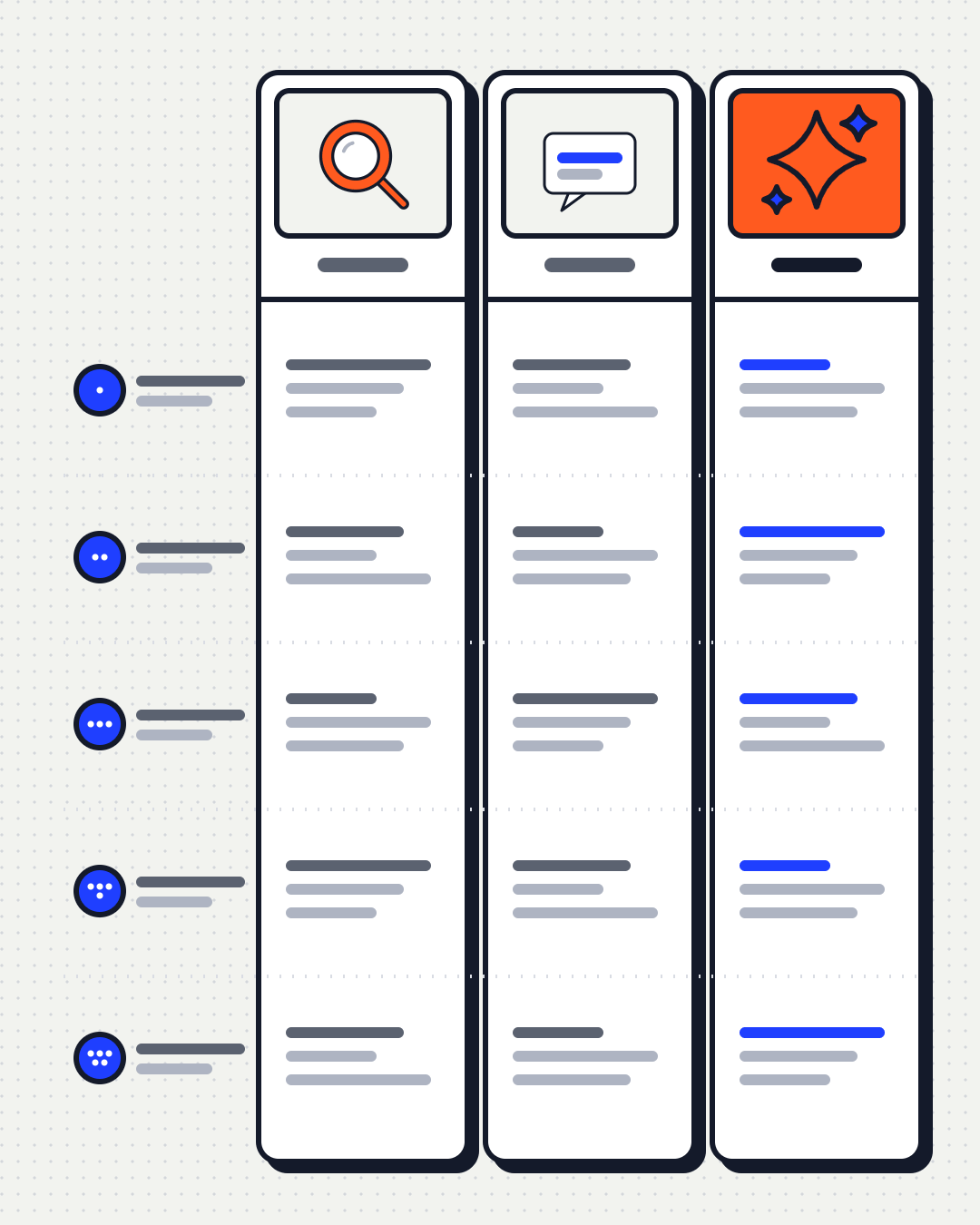
For Google it is still SEO
In its guide to optimizing for generative AI features, Google defines AEO (answer engine optimization) and GEO, then closes the matter: optimizing for generative AI search means optimizing for the search experience, "so it's still SEO". In Italy, Giorgio Taverniti is even blunter: "GEO doesn't exist".
I half agree. The basics are the same: a readable site, useful content, a real reputation. The reward changes. In SEO you win a click. In GEO you win a citation or a brand mention, often with no click, and on engines that are not Google.
That is why I treat it as an extension of SEO consulting, not a separate trade: my AI answer visibility service follows the same principles. The differences come down to three points: which engines you look at, which off-site signals you work on, and how you measure.
| SEO | AEO | GEO | |
|---|---|---|---|
| Goal | Rank pages | Be the direct answer | Be cited in AI answers |
| Where | Google, Bing | Featured snippets, voice assistants | ChatGPT, Perplexity, Gemini, Copilot, Claude, AI Overviews, AI Mode |
| What competes | The page | The paragraph that answers | The source: page and brand |
| Metrics | Rankings, clicks, conversions | Presence in the answer | Share of answers that cite you, mentions, traffic from assistants |
| Levers | Technical, content, links | Clear questions and answers | SEO, plus citable passages, original data, mentions |
How ChatGPT, Perplexity, Gemini, Copilot and Claude choose their sources
The audience is already there. In December 2025, in Audicom data processed by Vincenzo Cosenza, almost 15 million Italians used AI apps: ChatGPT 10.1 million, Gemini 6 million, Perplexity 1.57 million.
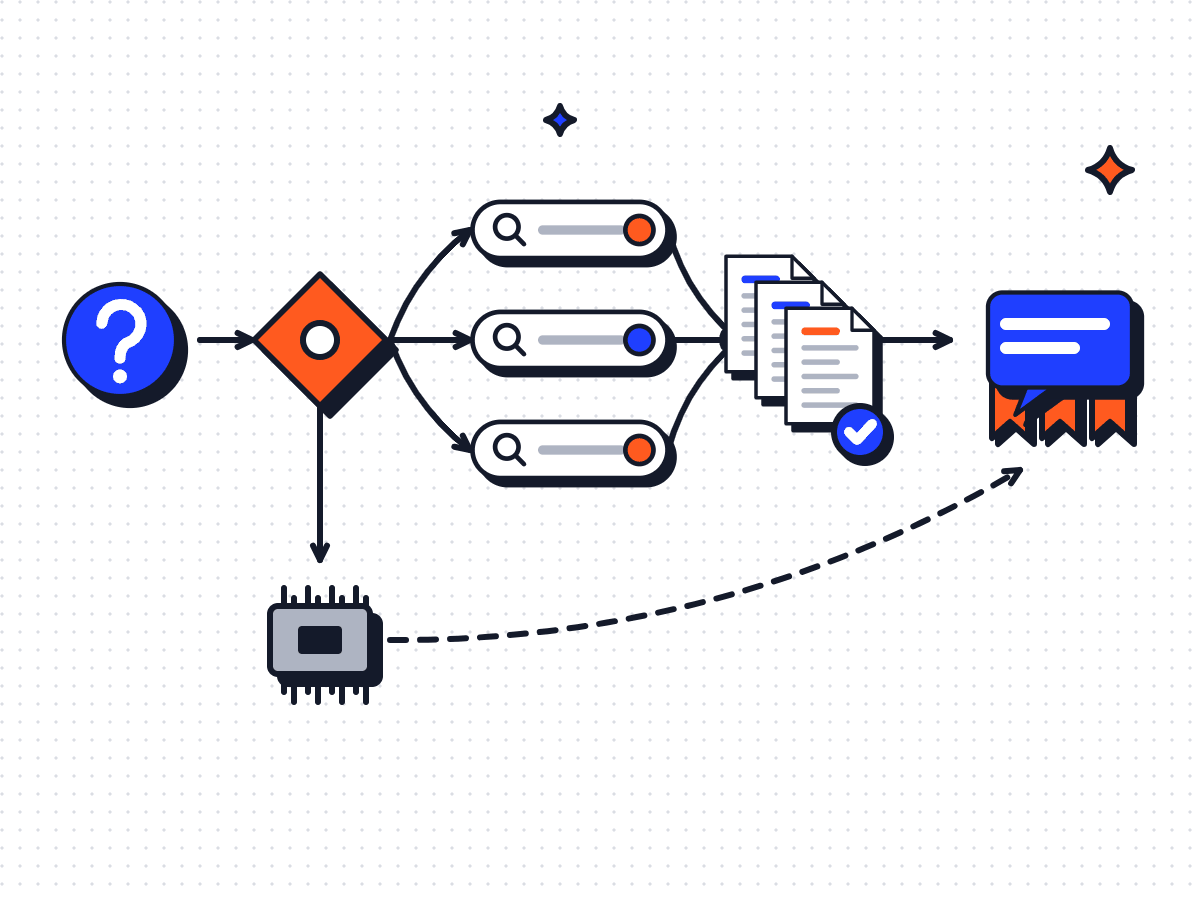
The way these tools answer is similar across the board. The system decides whether to search, turns the question into one or more short searches, reads a few pages, writes the answer and shows the sources. Three things change: the index it draws from, the crawler that must be able to read you, and how it cites you.
ChatGPT
ChatGPT searches the web on its own when a question can benefit from it, or when you ask it to with the search icon. It may share search queries, disconnected from your account, with external search providers: in its search help page OpenAI names Bing. Google is not named as a provider.
Answers with search have inline citations and a Sources button under the answer, which collects the links used. The crawler to let in is OAI-SearchBot.
Perplexity
Perplexity searches in real time when you ask a question and puts numbered citations to its sources in every answer. It is the engine where it is easiest to see who gets cited, because the links are always there. The crawler to let in is PerplexityBot.
Gemini
The Gemini app uses grounding with Google Search: the model decides whether to search, generates the queries and cites the sources, which you find in the Sources button under the answer. It therefore draws from Google's index, read by Googlebot. Google-Extended is not a crawler but a robots.txt token, and it decides whether your content can be used for grounding in the app.
Copilot
Copilot relies on Bing. In the business version, Microsoft 365 Copilot Chat, Microsoft describes the step explicitly: Copilot generates a short query from the request and sends it to Bing. The Sources button under the answer shows the exact query and the pages used.
This is a valuable detail for GEO: it shows you the words the engine actually searched with. If your site is not well indexed on Bing, it almost does not exist for Copilot.
Claude
Claude decides on its own when to search the web, and every answer with search includes citations. Anthropic does not state which index it uses for general search. It does document its bots, though: Claude-SearchBot indexes content to improve search results, Claude-User visits pages when a user asks a question, ClaudeBot collects data for training.
The engines compared
| Engine | Where sources come from | Crawler to let in | How it shows sources | How you check |
|---|---|---|---|---|
| ChatGPT | OpenAI crawler and external providers (Bing) | OAI-SearchBot | Inline citations, Sources button | Prompt log; GA4 (utm_source=chatgpt.com) |
| Perplexity | Real-time web search | PerplexityBot | Numbered citations | Prompt log; GA4 |
| Gemini (app) | Google Search, through grounding | Googlebot; Google-Extended token | Sources button | Prompt log; GA4 |
| Copilot | Bing | Bingbot | Sources button, with the query sent | Bing Webmaster Tools, AI Performance report |
| Claude | Undisclosed index; Anthropic crawlers | Claude-SearchBot, Claude-User | Citations in every answer with search | Server logs; prompt log |
| AI Overviews and AI Mode | Google index, query fan-out | Googlebot | Links to sources next to the answer | Search Console, generative AI report |
Google's AI features have their own rules, from snippet controls to the Search Console report: you will find them in the guides to Google AI Mode and AI Overviews. Here I stay on the other engines and on what applies to all of them.
What studies say about the factors that get a page cited
Studies on GEO are still few and almost all of them measure correlations. Taken together, though, they point in a fairly clear direction. I list them from the most rigorous to the most practical.
The GEO paper: sources, quotes and numbers work, keywords don't
On GEO-bench, 10,000 queries across different domains, the researchers tried 9 ways of rewriting a piece of content. Adding cited sources, direct quotations and statistics produced 30-40% more visibility, measured as words of the content picked up in the answer and weighted by position. On subjective impression the gain was 15-30%.
- Keyword stuffing gave "little to no improvement".
- By citing sources, sites ranked fifth in the SERP gained 115.1% in visibility, while the top-ranked site lost 30.3% on average.
- Smoother writing combined with statistics beat the best single technique by more than 5.5%.
- On Perplexity, a real engine, improvements reached 37% on subjective impression and 22% on position-weighted words.
Brand mentions and ranking
A 2025 Ahrefs study of 75,000 brands found that presence in AI Overviews correlates mostly with brand mentions across the web (0.664), then with anchors that contain the brand name (0.527). Backlinks stop at 0.218. It is a correlation, not proof of cause, but the signal is strong.
Ranking on Google matters, but less than you might think and differently for each engine. In July 2025 Ahrefs found that 76% of AI Overview citations came from Google's top 10; in the March 2026 update the share had fallen to 38%. Seer Interactive, on 10,000 questions to GPT-4o in the finance and SaaS sectors, measured in 2025 a correlation of about 0.65 between Google's first page and mentions in the model, against 0.5-0.6 for Bing.
ChatGPT with search on goes well beyond the first page: in a 2025 Semrush study, on digital marketing and SEO topics, almost 9 cited pages out of 10 sat at position 21 or lower for related queries.
Each engine prefers different sources, and changes its mind
Semrush tracked more than 100 million citations across over 230,000 prompts for 13 weeks, between July and October 2025. On ChatGPT the most cited domains were Wikipedia and Reddit; on AI Mode LinkedIn, YouTube and Reddit; on Perplexity Reddit, LinkedIn and the National Institutes of Health site.
The figure that struck me most is a different one. In early August Reddit appeared in almost 60% of ChatGPT answers; by mid-September it was around 10%. A single change in the engine is enough to move everything: that is why GEO is measured over time, not with a single test.
Freshness and updates
In a 2025 Ahrefs study, AI assistants cited content that was on average 25.7% more recent than organic results, with ChatGPT in the lead. That does not mean changing the date at random. It means genuinely reviewing data, prices and regulations on the pages that bring in leads.
Why being cited is worth it
The click from classic search is worth less than before. On the sites I follow, question-style queries lost 28% of CTR at equal position in one year: not everything can be attributed to AI answers, but these are exactly the searches Google answers by itself. The full numbers are in the guide to AI Overviews.
Being cited recovers part of that value. Seer Interactive, on data between January 2025 and February 2026, saw that for informational queries sites cited in the AI Overview have an organic CTR 120% higher than when they are not cited: again a correlation, not a cause. And Semrush estimated in 2025 that a visitor from AI search is worth 4.4 times an organic one, in terms of conversion rate.
On-site levers: be readable and write citable passages
From the studies and the official guidance come four things to do on the site, plus a fifth that costs little. Order matters: if an engine cannot read the page, the rest is useless.
1. Put the content in the HTML and let crawlers in
The first check is trivial and many skip it. Search bots (OAI-SearchBot, PerplexityBot, Claude-SearchBot, Googlebot, Bingbot) must not be blocked in robots.txt, nor in the firewall or CDN, where anti-bot filters stop them without anyone noticing. Then check in the server logs that they receive 200 responses and not 403 errors.
Where the text sits also matters. According to a December 2024 Vercel analysis, the main AI crawlers did not execute JavaScript, while Gemini used Googlebot's infrastructure. The finding is almost two years old, but the cautious rule does not change: prices, specs and answers must be in the HTML that arrives from the server, not appear after a script.
2. Give an answer under every subheading
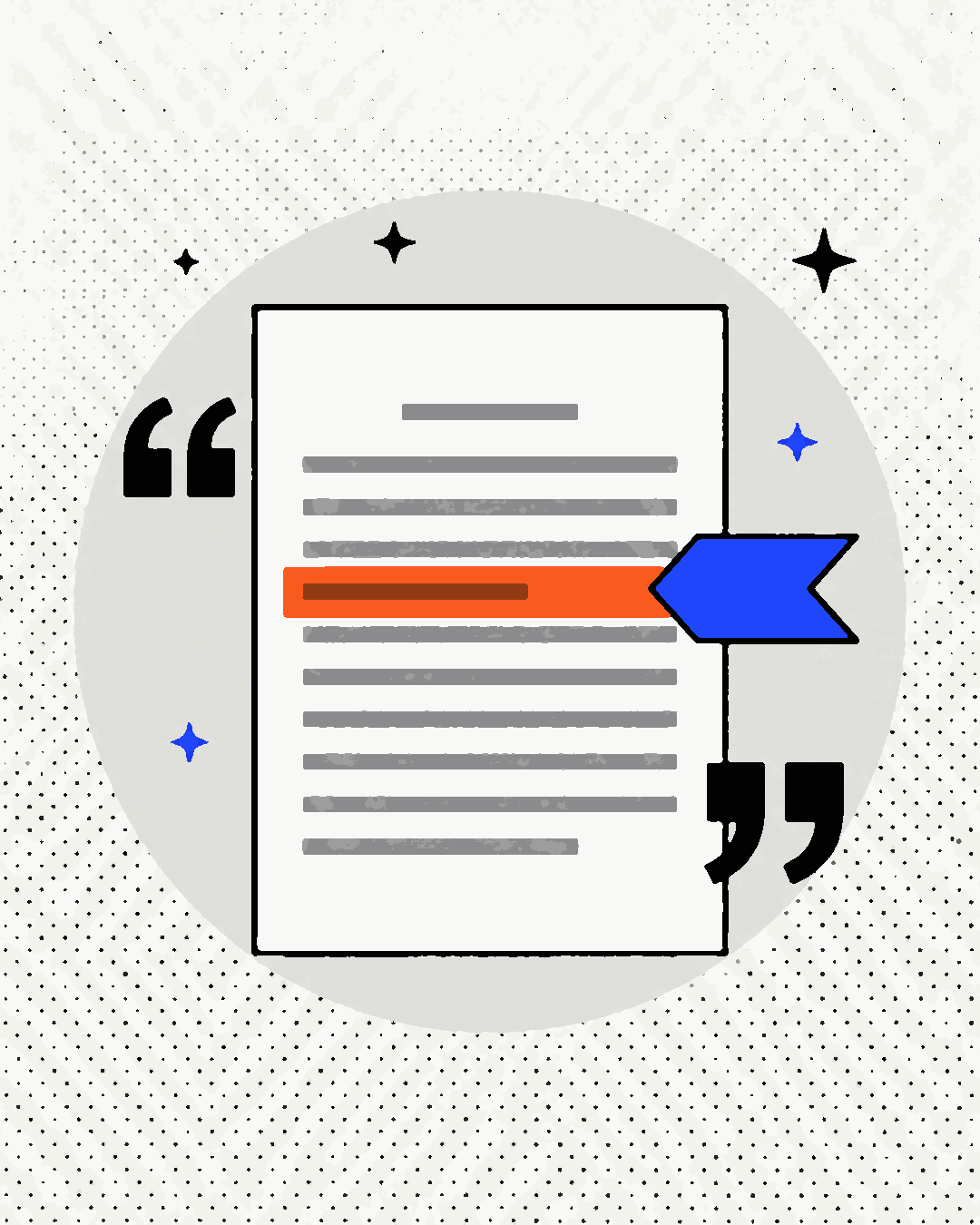
Engines search with short queries and then extract passages. A passage works when it stands on its own: it says who or what it is about, answers in the first sentence, puts the details after.
Under each heading write two or three sentences that answer right away, then exceptions and details. The heading states the question or topic in plain words. There is no need to chop texts into tiny fragments: Google explicitly says it is not required, and that holds for the other engines too, which read normal pages.
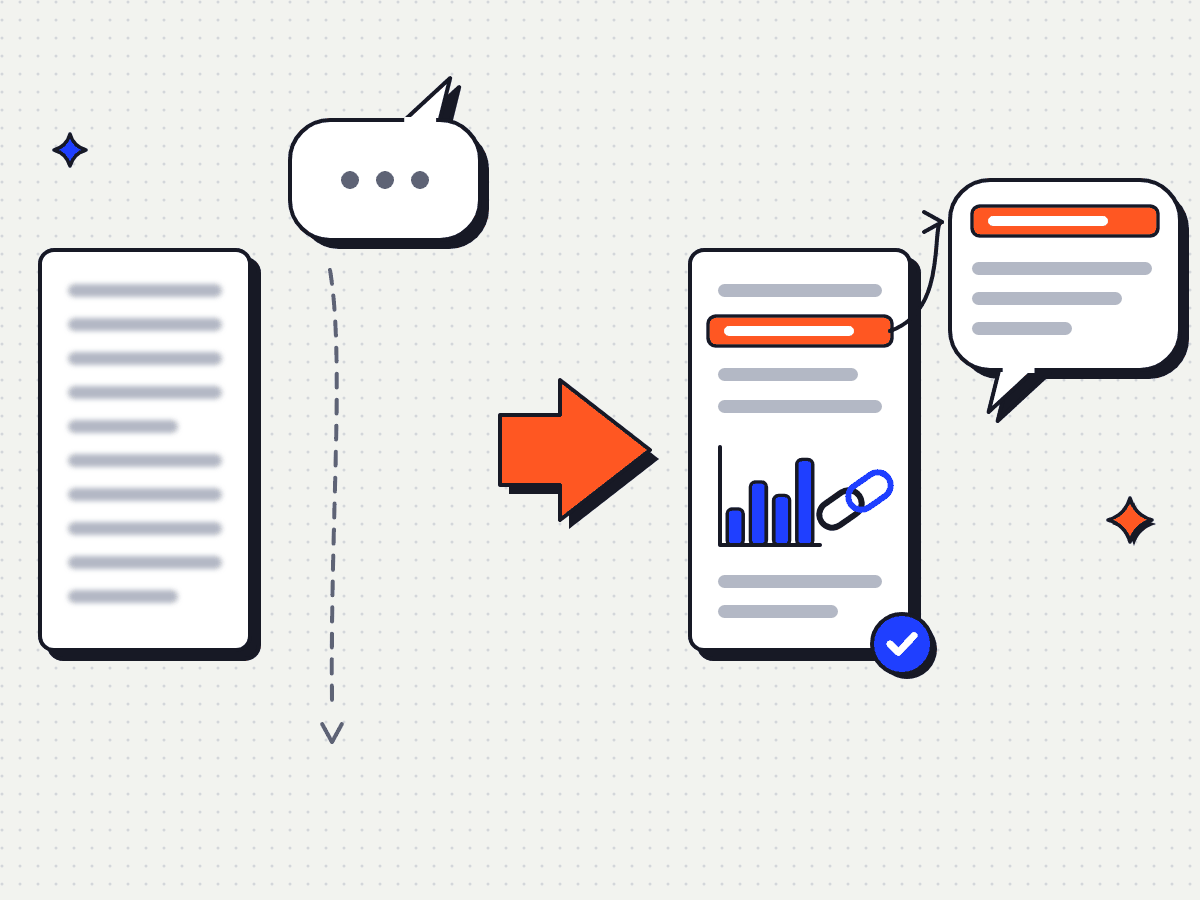
3. Before and after: a paragraph rewritten to be cited
An example, with a fictional company that makes windows. The starting paragraph has the style of many company pages:
Our windows are among the best on the market and guarantee exceptional energy savings thanks to cutting-edge technology. Contact us to discover all the benefits!
No engine has a reason to cite it. It does not say which product it is about, it has no number, it answers no question a person would ask. The rewritten version, again fictional:
The Alfa 82 PVC window has triple glazing and a thermal transmittance Uw of 0.9 W/m²K, measured in the laboratory on the 1230 × 1480 mm model. Compared with a single-glazed window, it reduces heat loss through the frame. Installation by our crew takes on average half a day per window.
What changed, point by point:
- Explicit subject: the product name is in the first sentence, so the passage makes sense even detached from the rest of the page.
- Numbers instead of adjectives: "0.9 W/m²K" replaces "exceptional", with the unit of measure and the condition it was measured under.
- Origin of the data: "measured in the laboratory" says where the number comes from; on a real page the link to the technical sheet would go here.
- A real question it answers: how well it insulates, how long installation takes.
- No sales pitch in the passage: the contact call sits elsewhere on the page.
These are the same techniques that work best in the GEO paper: statistics, sources, quotations with the name and role of the speaker. And they are the same that make the text more credible to a person.
4. Publish information only you have, and keep it up to date
If you say what everyone says, nobody has a reason to cite you in particular. Google asks for content with an original point of view and first-hand experience, going beyond what can be found everywhere. A first-hand review, a test, data you collected yourself, a case with numbers.
If you sell products or have a physical location, keep Merchant Center and your Business Profile up to date: according to Google they also help visibility in AI answers. And show the update date on pages, changing it only when you really change the content.
5. Work on Bing too
Copilot draws from Bing and ChatGPT names Bing among its search providers, so Bing is not a secondary engine. Add the site, submit the sitemap and check that important pages are indexed: it is half an hour of work and covers two more engines.
Typical on-site mistakes
- Answers hidden in tabs and accordions loaded later: if the text arrives only on click, via script, many AI crawlers do not read it.
- Important information only in PDFs or images: price lists and technical sheets should also go on an HTML page, with the numbers written in the text.
- FAQs written "for AI": dozens of invented questions with one-line answers add nothing and lengthen the page. Better a few real questions.
- Dates updated without updating: changing the date on a page that stayed the same does not make it fresher, neither for people nor for engines.
- Different names for the same thing: if the product has three names across title, text and spec sheet, the engine struggles to understand it is the same one.
Off-site levers: mentions, reviews, Wikipedia and forums
Brand mentions weigh more than backlinks, at least in AI Overviews. The reason is intuitive: an engine that has to recommend a supplier trusts a name that appears in many independent sources more than a page that speaks well of itself.
Google warns, however, that chasing "inauthentic" mentions across the web does not help as much as it seems. Mentions cannot be bought: they are earned.
Mentions in the press, associations and events
The best sources are those an engine considers independent: trade press, industry associations, lists of trade fairs and events, partner and supplier sites. The most reliable way to get them is to have something to say: market data, a customer survey, a public price list that others can pick up.
Example, again with the fictional window company: every year it publishes average installation times and the most frequent problems found in renovated homes, with the method and the number of job sites. Data like that gets picked up by trade magazines, architects' blogs and forums of people renovating. Each pickup is an authentic mention, with the company name next to a useful fact.
Reviews
Reviews are mentions with a verdict. For local businesses they live in the Business Profile, which Google also uses in AI answers; for other engines, those published on pages crawlers can read count. Ask every customer in the same way and always reply: the rules on what is allowed are in the guide to Google reviews.
Wikipedia and Wikidata
In the Semrush study Wikipedia was among the two domains most cited by ChatGPT, but it is not a showcase. Anyone writing about an organization they belong to, paid or not, has a conflict of interest: they must disclose it on their user page and on the talk page of every article they edit, and a new article must be created as a draft to be reviewed by third parties. Those who do not risk being blocked and having their edits removed.
In practice, a Wikipedia article comes when the company is already notable through independent sources. Wikidata has a different threshold: an item is admitted if it links to a page of a Wikimedia project, or if it concerns a clearly identifiable entity that can be described with serious public sources, or if it serves to structure other data.
Forums and communities
Reddit and industry forums often appear among the sources, as seen in the studies. The temptation is to open profiles and speak well of yourself. Many forums ban self-promotion, and the mentions that come out of it are exactly the inauthentic ones that engines weigh little.
What works is taking part as an expert: answering real questions in your field, under your own name, without links when they are not needed. A useful answer that mentions your company because it is relevant is worth more than ten promotional messages.
AI crawlers and robots.txt: the rule in brief
Each platform has different bots for different tasks, and it is best to decide on them separately. There are bots that build the search index, bots that collect data to train models, and agents that start when a person asks a question.
| Bot | What it is for | What to do |
|---|---|---|
| OAI-SearchBot (OpenAI) | Showing sites in ChatGPT search | Let it in |
| PerplexityBot | Showing and linking sites in results | Let it in |
| Claude-SearchBot (Anthropic) | Indexing content for Claude's search | Let it in |
| Bingbot, Googlebot | Bing and Google indexes, hence Copilot, Gemini, AI Overviews and AI Mode | Let them in |
| GPTBot, ClaudeBot, Google-Extended | Model training (Google-Extended is only a token) | Business choice |
| ChatGPT-User, Claude-User, Perplexity-User | Visits on a user's request | For OpenAI and Perplexity robots.txt may not apply; if needed, limit them on the server |
Blocking GPTBot does not take you out of ChatGPT search. Blocking OAI-SearchBot does: at most you remain as a navigational link. Blocking Google-Extended does not affect Google Search, but it excludes your content from grounding in the Gemini app.
A robots.txt for those who want to be cited but not used for training:
# AI search: we want to be cited
User-agent: OAI-SearchBot
Allow: /

User-agent: PerplexityBot
Allow: /

User-agent: Claude-SearchBot
Allow: /

# Model training: no
User-agent: GPTBot
Disallow: /

User-agent: ClaudeBot
Disallow: /
OpenAI states that its systems pick up a robots.txt change in about 24 hours. Before blocking anything, look in the logs at which bots actually arrive and how much they weigh on the server.
llms.txt: when it helps and when it doesn't
llms.txt is a Markdown file to publish in the root of the site, proposed by Jeremy Howard of Answer.AI in September 2024, that lists the pages useful for language models. It has become the symbol of GEO, and its effect is almost always overrated.
For Google it is not needed: Search ignores these files, and creating them neither helps nor harms. Google adds that publishing it for other services that use it is "fine". No major AI search platform has confirmed reading it, and in a Semrush test between August and October 2025 the file received no visits from either GPTBot or PerplexityBot.
Where it makes sense: technical documentation, APIs, complex catalogs, and agents working in the browser. Lighthouse, Chrome's audit tool, checks it in the "Agentic Browsing" category. On seo.srl I published it, generated automatically from the site's pages, because keeping it costs little; I do not expect extra citations.
Format, examples and file checks are in the dedicated guide to llms.txt.
How to measure visibility in AI, step by step
There is no single report that tells you how many times assistants cite you. There are pieces: Search Console for Google, Bing Webmaster Tools for Copilot, GA4 for visits, logs for crawlers. The missing piece is the most important, and it is done by hand: a prompt log.
Before describing it, a finding that changes how you read it. SparkToro and Gumshoe had 12 recommendation prompts repeated 60-100 times each on ChatGPT, Claude and Google's AI, in November and December 2025. The probability that ChatGPT or Google's AI returned the same list of brands was below 1 in 100; in the same order, about 1 in 1,000.
The authors' conclusion is the one to keep: position inside an answer means nothing, while the percentage of answers in which you appear, over many repeated questions, does.
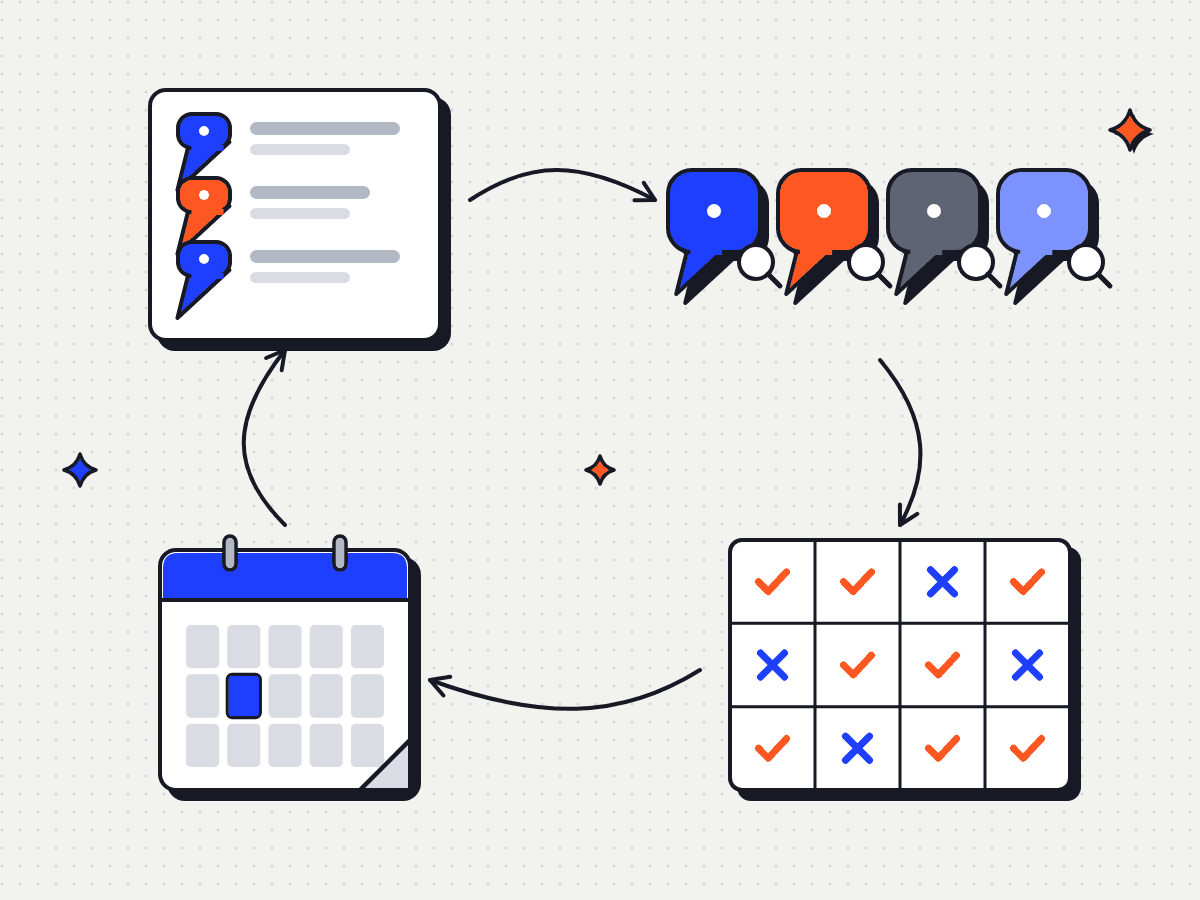
Step 1: choose 20-30 prompts
Prompts are not invented: they are taken from real questions. The best sources are requests that arrive by email or phone, question-style queries in Search Console, and the questions your salespeople hear most often.
Split them into three roughly equal groups:
- Choice questions: "which invoicing software for a small firm", "best PVC windows for a house in the mountains". Here it is decided who gets recommended.
- Informational questions: "how the window tax deduction works", "how long does window installation take". Here it is decided who gets cited as a source.
- Brand questions: "what does [company name] do", "is [company name] reliable". Here you check that the information about you is correct.
Write them the way a customer would, in the language your customers use, with the geographic detail if it matters. Then do not change them again: the log only works if the questions stay identical.
Step 2: set up a neutral environment
Answers change with the account's history and preferences. To reduce variability:
- on ChatGPT use a temporary chat without personalization, which does not use memories or custom instructions;
- on other engines use an account with no history on the topic, or an incognito window where the engine can be used without signing in;
- run the tests from the country where your customers are (Italy, for an Italian business): ChatGPT shares with search providers an approximate location derived from the IP, and results change;
- check that web search is on, because without search the model answers from memory and cites no sources.
Step 3: query the engines
For each prompt open a new conversation, paste the identical question and add nothing. Pick four fixed engines: for most Italian companies ChatGPT, Gemini, Perplexity and AI Mode, plus Copilot if customers work in Microsoft environments.
Given the SparkToro finding, a single run per prompt is not enough. Do at least three repetitions for each prompt-engine pair and count in how many the site or brand appears. With 25 prompts and 4 engines that is 300 answers: a few hours a month, easily split between two people.
Step 4: record every answer
For each answer note six things: the prompt, the engine, the date, whether you are cited (yes or no), which source is cited instead of you, and notes. In the notes write the page cited, whether the brand is named without a link, and above all whether the information about you is wrong.
The most useful column is "source cited instead of me". After a month it tells you which sites the engines consider authoritative on your topic: a competitor, an industry portal, a Reddit discussion, a Wikipedia article. These are the places to work on for mentions.
| Prompt | Engine | Date | Cited | Source cited instead of me | Notes |
|---|---|---|---|---|---|
| best PVC windows for a house in the mountains | Perplexity | November 3 | No | Industry portal, comparison guide | Brand does not appear; a competitor cited two times out of three |
| how long does window installation take | ChatGPT | November 3 | Yes | Installation page cited, timing data picked up |
The table rows are an example, with the fictional company from before.
Step 5: repeat every month and read the trend
Once a month is enough: measure more often and you measure noise, less often and you miss engine changes. There is only one metric to follow, the share of answers that cite you, by engine and by prompt group. A move from 10% to 25% over three months says something; a single answer does not.
When the share rises or falls sharply, look at the pages cited and at the competitor sources column: they usually explain what changed.
Typical mistakes that make the log useless:
- changing the wording of prompts from one month to the next, so the data are no longer comparable;
- counting only links and not brand mentions without a link, which for choice questions are the result that matters;
- running tests from your usual account, where memory already knows who you are and what you sell;
- drawing conclusions from a single round, or from a single engine.
Search Console, Bing Webmaster Tools, GA4 and logs
The log tells you whether you are cited. The other tools tell you what happens next, and cover different pieces:
- Search Console: from August 31, 2026 the generative AI performance report shows impressions in AI Overviews and AI Mode by page, country, date and device. Details are in the AI Mode guide.
- Bing Webmaster Tools: since February 2026 the AI Performance report, in public preview, counts the site's citations in Copilot, in Bing's AI summaries and in some partner integrations, with the most cited pages and a sample of the queries the AI used to retrieve them.
- GA4: the default AI Assistant channel collects visits from sources such as ChatGPT, Gemini, Deepseek, Copilot or Grok; AI Overviews and AI Mode stay in Organic Search. A finding from the sites I follow: across 7 sites, clicks from ChatGPT are over 90% of the visits that come from AI assistants.
- Server logs: if OAI-SearchBot, PerplexityBot or Claude-SearchBot do not arrive, or receive errors, the problem is technical and comes before everything else.
The query sample in Bing's report is the closest you get to what an assistant really searches. Compare it with the prompts in your log: if the words are different, it is a hint on how to rename titles and subheadings.
Six GEO myths
Around GEO a lot of shortcuts are sold. These six do not work, or work much less than they promise.
- An llms.txt file to appear on Google. Search ignores it, and the other engines have not said they use it.
- Chopping texts into "chunks" for AI. It is not required. Each section needs to answer clearly, not the text to be shredded.
- Stuffing pages with keyword variants. Models understand synonyms and meanings, and in the GEO paper keyword stuffing gives little to no improvement.
- schema.org markup "for AI". For Google, structured data is not required for generative AI search and there is no special markup. It remains useful for classic results: keep it.
- Buying mentions or spamming forums. Google says inauthentic mentions help little, and many forums ban self-promotion. What counts are mentions that arrive on their own.
- A tool that gives you your "position" in AI. With answers that change almost every time, a single position makes no sense. What you need is the share of presence across many repeated prompts, as in the log.
The first month of work, week by week
If you start from zero, this is the order I suggest. Each week takes a few hours, and at the end you have a baseline to measure from.
Week 1: access and tools
- Check robots.txt, firewall and CDN for AI search bots.
- Look in the logs for OAI-SearchBot, PerplexityBot, Claude-SearchBot and Bingbot, with their response codes.
- Add the site to Bing Webmaster Tools and submit the sitemap.
- Open the AI Assistant channel in GA4 and note the starting point.
Week 2: the baseline log
- Choose the 20-30 prompts and have them approved by whoever talks to customers.
- Do the first round on four engines, with three repetitions.
- Mark wrong information about your brand: it is the first thing to fix, on the site and in profiles.
Week 3: the pages
- Take the five pages that should answer the most important prompts.
- Rewrite the opening of each section as in the before and after example: subject, number, origin of the data.
- Add what only you have: a data point, a case, a table with your prices or timings.
Week 4: off the site
- Align name, address and description across the site, Business Profile, LinkedIn and industry directories.
- Look at the "source cited instead of me" column: pick two of those sources and ask how to appear there legitimately.
- Start a steady review request process, the same for every customer.
From the second month the work becomes a fixed cycle: log, a handful of improved pages, one new external source. Results show up in the share of citations, month after month, not in a single test.
Frequently asked questions
Can you pay to appear in ChatGPT answers?
No. In January 2026 OpenAI announced a test of ads in ChatGPT in the United States, on the Free and Go plans: ads sit at the bottom of the answer, labeled and separate, and according to OpenAI they do not influence answers. Being cited among the sources remains an organic result.
How long does it take for a change to show up in AI answers?
It depends on what you change. A robots.txt change is picked up by OpenAI and Perplexity within about 24 hours. A rewritten text has to be read again by crawlers and re-enter the indexes, and no engine states timelines: it is best judged on two or three monthly measurements of the same prompts, not on a test done the next day.


