
Branded and Non-Branded Keywords: What You Really Need to Know
Branded keywords contain your name; non-branded ones are generic searches from people who don't know you yet. How to separate them in Search Console, read the data and handle them in SEO and Google Ads.

Eugenio Tommasi
Founder of SEO SRL
Published 7 min read

Branded keywords contain the name of a company or its products and are used by people who already know it; non-branded keywords are generic searches from people who are still weighing their options.
Table of contents (10 sections)
- What branded keywords are
- What non-branded keywords are
- How to separate them in Search Console
- How to read the numbers
- SEO for branded searches: own your results page
- SEO for non-branded searches: where new customers are found
- Branded and non-branded in Google Ads
- If a competitor advertises on your name
- The most common mistakes
- Frequently asked questions
Branded keywords contain the name of your company or products: they are used by people who already know you. Non-branded keywords are generic searches from people who have a need but haven't yet chosen who to turn to. Separating them in your data tells you whether you are finding new customers or whether only the customers you already have are searching for you.
You can recognize them in a few seconds, but separating them properly in your data takes more care. In Search Console you split them with a filter; then you have to read the numbers and manage the two groups in SEO and in Google Ads, including the case where a competitor advertises on your name.
What branded keywords are
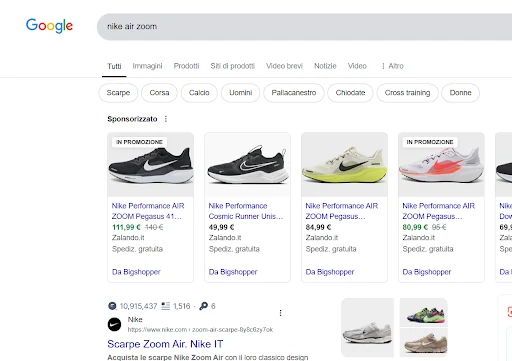
These are searches that contain your brand, in any form. Here is an example with a made-up brand, "Acmevit", which makes supplements:
| Type | Example | What the searcher wants |
|---|---|---|
| Brand only | acmevit | To reach the site |
| Brand + product | acmevit vitamin c | A specific product |
| Brand + intent | acmevit reviews, acmevit discount code, acmevit contact | Reassurance before buying, or support |
| Typos and variants | acmevitt, acmevit natural supplements | The same thing, misspelled or spelled out |
| Product names | the name of a product line | People who know the product but not the brand |
People who run these searches have already passed the choice stage, or nearly: maybe they saw an ad, read a review or heard about you from a friend. That is why branded searches usually convert better than the others and are easier to cover: your official site is the most relevant result for your name.
What non-branded keywords are
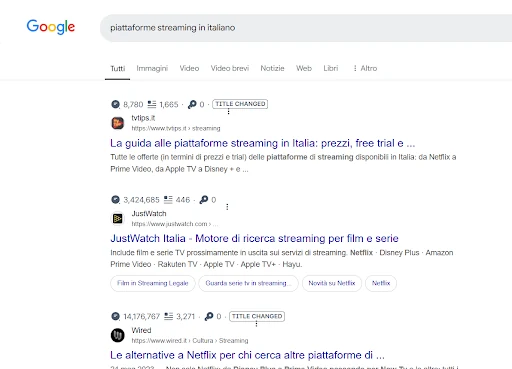
These are all the others: "natural vitamin C supplement", "how to boost your immune system", "best supplements for tiredness". The searcher doesn't know you and is exploring or comparing. These are the searches that bring new customers, and the ones where competition is toughest. Competitors' brands are a special case: for you they are non-branded searches, for them they are branded.
| Branded | Non-branded | |
|---|---|---|
| Who searches | People who already know you | People who don't know you yet |
| Stage | Decision, support | Discovery, comparison |
| Competition | Low, except for those advertising on your name | High |
| Conversion | Usually high | Lower, longer path |
| What makes them grow | Awareness: word of mouth, advertising, social, PR | SEO, content, generic campaigns |
How to separate them in Search Console
Search Console has a dedicated filter, announced on November 20, 2025 and rolled out to all eligible sites on March 11, 2026. In the Performance report you can split queries into branded and non-branded: the classification is done by an internal AI-assisted system that recognizes the name, close variants, typos and the products or services associated with the brand. The filter applies to clicks, impressions, CTR and average position.
There are limits: it isn't available for every property, because it requires minimum volumes of queries and impressions, and some queries may be misclassified.
If the filter isn't there, use regular expressions. In Performance add a Query filter, choose Custom (regex) and then Matches regex to see branded queries or Doesn't match regex for all the others, with an expression like this:
acmevit|acmevitt|acme vitThe | symbol means "or": add all the variants and typos you find in the query table. Search Console uses RE2 syntax, which doesn't support some advanced constructs such as lookahead: to exclude the brand, use the "Doesn't match regex" option rather than tricks in the regex.
How to read the numbers
There is no "right" share of branded traffic: it depends on how well known you are and on your industry. What matters is how the two groups move over time:
- non-branded grows: SEO is working, new people are finding you;
- branded grows: brand awareness is growing, often thanks to channels that have nothing to do with Google (social, word of mouth, advertising, events). It's an excellent sign, but it shouldn't be credited to SEO;
- almost all traffic is branded: the site lives off people who already know you and doesn't capture new demand. That's where to start;
- non-branded drops but rankings hold: look at the SERP. If boxes, videos or an AI Overview have appeared above you, you lose clicks without losing positions.
Separating the two groups also avoids a common misreading: a rise in total clicks that comes entirely from the brand name says nothing about your SEO work.
SEO for branded searches: own your results page
For your own name you are almost always first. The job is to make sure the whole results page speaks well of you and leads where you want:
- A clear home page, with a title that states your name and what you do.
- Pages for "brand + intent" searches: contact, pricing, shipping, returns, support. If you don't answer, forums and review sites will.
- A complete Google Business Profile, if you have a physical location: it appears next to the results for your name. Google reviews matter too, and so does how you reply.
- Well-kept social profiles and external pages, because they occupy the positions below your site.
SEO for non-branded searches: where new customers are found
Here the work is the classic kind: choose the right searches by intent, build one page for each group and move them up. If you sell supplements, besides your brand name followed by "vitamin C", target "best vitamin C supplement" with an honest comparison guide and "vitamin C supplement 1000 mg" with the product page. The step-by-step method is in the guide to Google keywords, and how to measure the position of each one is in the one on Google ranking.
Non-branded searches also do indirect work: someone who discovers you today through a generic search will search for you by name tomorrow. That is why growth in non-branded is often followed, after some time, by growth in branded.
Branded and non-branded in Google Ads
In paid advertising the difference shows up in costs. Ads on your own name usually have high expected CTR, ad relevance and landing page experience: these are the components that, together with your bid, determine ad rank, and therefore position and cost. The Quality Score from 1 to 10 that you see in the account is only a diagnostic tool and doesn't enter the auction.
The rule that doesn't change: keep branded campaigns separate from generic ones. Google Ads helps with brand settings:
- brand restrictions, in Search campaigns with broad match: they limit traffic to searches that contain the brands you choose;
- brand exclusions, in Performance Max: they prevent the campaign from appearing for searches on your name, misspellings included.
Is it worth paying for your own name? Often yes, especially if competitors bid on you. But if you are already first in the organic results and nobody is buying your name, some of those clicks would come anyway for free. The only way to know is a test: pause the branded campaign for a few weeks and compare total conversions, not just those from ads.
I have managed Google Ads campaigns for over 15 years, including for companies that invest more than €10,000 a month, and on this point I don't change my mind with the budget. If you mix the two, the easy branded conversions make the generic part look profitable too, and you no longer know where you are spending well.
If a competitor advertises on your name
It happens often, and it's called conquesting. Google Ads policies distinguish two cases:
- your trademark as a keyword: it is allowed, Google doesn't restrict it;
- your trademark in the ad text: the owner can file a complaint, and Google limits its use in ads from direct competitors and in ads that use it in an unclear or misleading way.
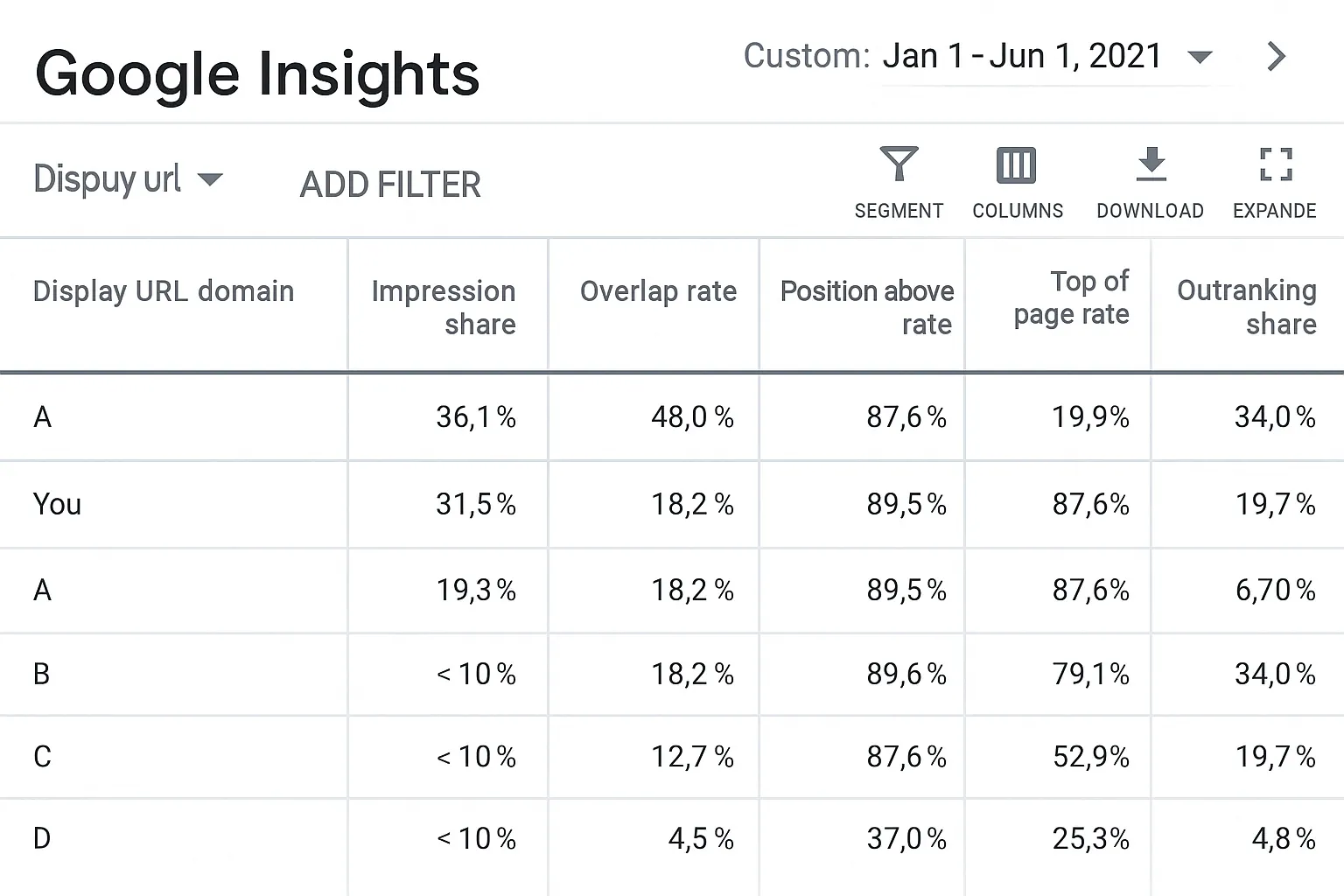
To see who shows up on your branded searches, use the Auction insights report in Google Ads, applied to the branded campaign: it shows which other advertisers take part and how often they outrank you. Being absent on your own name, when others are there, means leaving them the people who were looking for you. For a wider picture of who is competing with you for customers, you need a competitor analysis.

The most common mistakes
- Looking only at total clicks, without separating branded and non-branded.
- Crediting SEO with branded growth, which often comes from other channels.
- A single Google Ads campaign for everything, with budgets and results mixed together.
- Leaving "brand + reviews" or "brand + contact" searches uncovered: others answer in your place.
- Focusing only on the brand: you speak only to people who already know you and the site stops bringing in new customers.

Frequently asked questions
What is the difference between branded and non-branded keywords?
Branded keywords contain the name of the company, its products or their variants, including typos: they are used by people who already know you. Non-branded ones are generic and are used by people looking for a solution who don't yet know who to turn to. The former convert better, the latter bring new customers.
How do I separate branded queries in Search Console?
The Performance report has a branded and non-branded filter, announced on November 20, 2025 and run by an AI-assisted system, for properties with minimum volumes of queries and impressions. If you don't see it, add a Query filter with Custom (regex) and choose "Matches regex" or "Doesn't match regex" with an expression like name|variant|typo.
Can a competitor advertise on my trademark?
As a keyword, yes: Google Ads trademark policies don't restrict its use as a keyword. Use in the ad text, however, can be restricted after a complaint from the owner, in particular in ads from direct competitors and when the trademark is used in an unclear or misleading way.


